Flat Feet vs Normal Feet – What’s the Difference?
Your entire body is built on your feet. Walking, standing, and running seem comfortable and natural when they are in the right alignment. However, pain, exhaustion, and chronic discomfort can result from changes in the structure of your feet, particularly in the arches.
Flat feet are among the most prevalent problems with foot structure.
This article will explain how flat feet differ from normal feet, what symptoms to look out for, and how discomfort can be avoided with the right support.
🦶 What Are Normal Feet?
There is an apparent arch on the inside of a normal foot.
This arch helps:
- Evenly distribute your body weight
- Absorb shock while walking
- Lessen the strain on your muscles and joints
When standing, there’s usually a slight gap between the inner foot and the floor.
🦶 What Are Flat Feet?

Flat feet—also called fallen arches—occur when the arch collapses, causing most or all of the foot to touch the ground.
Some people are born with flat feet, while others develop them over time due to:
- Aging
- Injury
- Weight gain
- Weak foot muscles
- Long periods of standing
🔍 Key Differences Between Flat Feet and Normal Feet
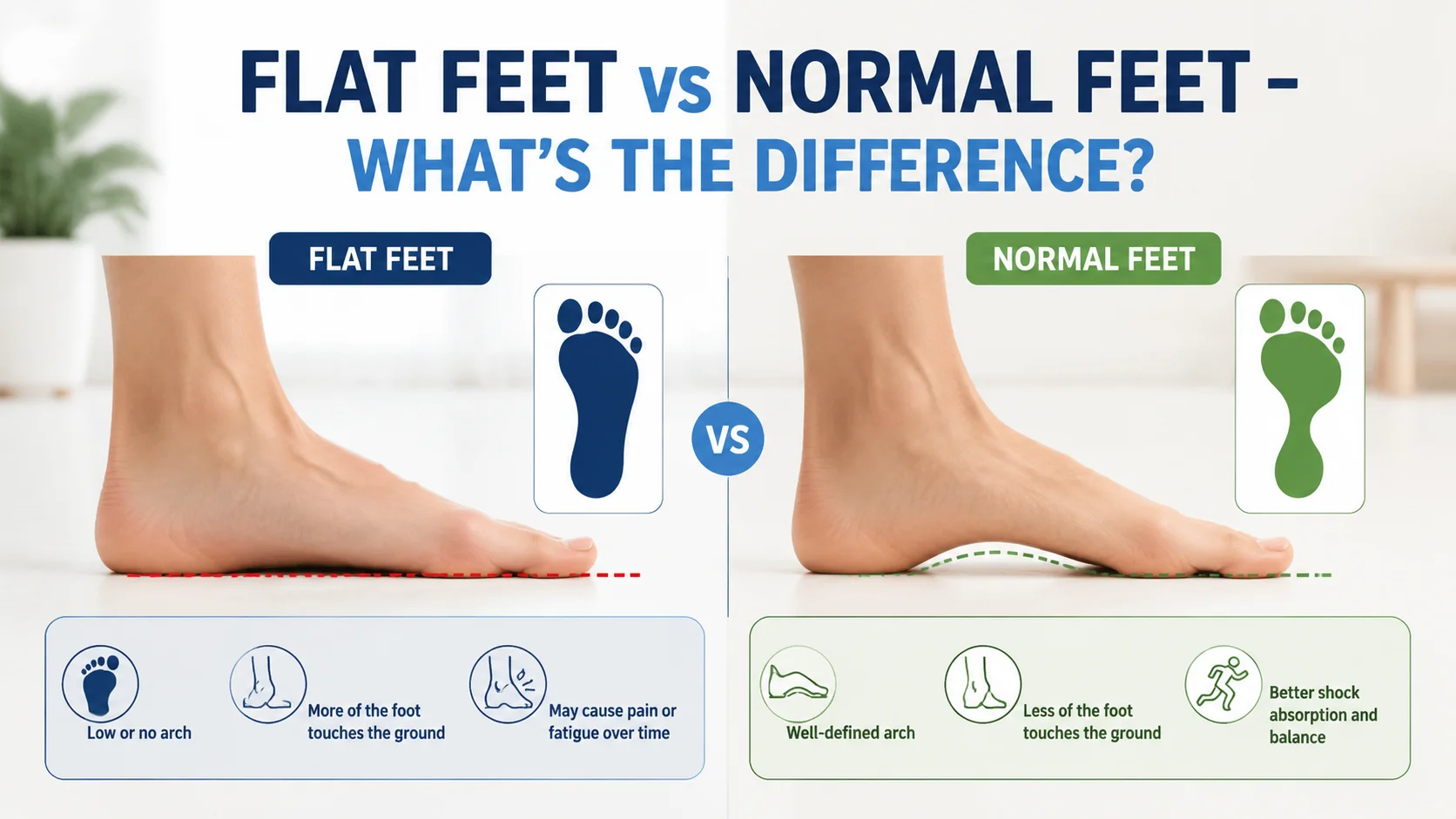
| Feature | Normal Feet | Flat Feet |
|---|---|---|
| Arch | Visible arch | Little or no arch |
| Weight Distribution | Balanced | Uneven |
| Shock Absorption | Better | Reduced |
| Foot Alignment | Natural | Can roll inward |
| Pain Risk | Lower | Higher |
⚠️ Symptoms of Flat Feet
Not everyone with flat feet experiences pain, but common symptoms include:
- Foot fatigue
- Heel pain
- Arch pain
- Swelling near the ankle
- Knee or lower back discomfort
- Pain after standing for long periods
👉 Flat feet are also linked to Plantar Fasciitis and other alignment issues.
🧪 Simple Test to Check for Flat Feet
Try the “wet foot test”:
- Wet the bottom of your foot
- Step onto a surface that shows footprints
- Look at the shape
Results:
- Normal arch: visible curve on the inside
- Flat foot: nearly full footprint visible
🏃 How Flat Feet Affect Your Body
Your feet affect more than just walking.
Flat feet can lead to:
- Poor posture
- Knee strain
- Hip pain
- Lower back discomfort
- Increased fatigue
Because your feet absorb less shock, other parts of your body take more stress.
🛠️ How to Manage Flat Feet
The good news? Most people can manage flat feet effectively without surgery.
✅ 1. Wear Supportive Shoes
Choose shoes with:
- Arch support
- Cushioning
- Stability
Avoid completely flat footwear whenever possible.
✅ 2. Use Medicated Insoles (Highly Recommended)
Supportive insoles can make a major difference for people with flat feet.
Especially effective options include:
These help by:
- Supporting the arch
- Improving weight distribution
- Reducing heel pressure
- Absorbing shock during walking
👉 Proper support can significantly reduce daily discomfort and fatigue.

✅ 3. Stretch and Strengthen Your Feet
Exercises can help improve flexibility and foot strength.
Focus on:
- Calf stretches
- Toe raises
- Arch strengthening exercises
✅ 4. Maintain a Healthy Weight
Reducing extra pressure on your feet can improve comfort and mobility.
❌ Common Mistakes to Avoid
- Wearing unsupportive shoes
- Ignoring early foot pain
- Standing too long without support
- Walking barefoot on hard floors
🔗 Related Guides
👉 Morning heel pain is often linked to foot structure problems—read our guide on why heel pain is worse in the morning and how to fix it.
👉 Flat feet can increase your risk of Plantar Fasciitis—learn more in our complete plantar fasciitis guide.
👉 Want to understand other causes of discomfort? Explore the most common causes of foot pain and how to treat them.
❓ FAQs
Are flat feet bad?
Not always, but they can increase the risk of pain and alignment problems if unsupported.
Can flat feet be corrected?
Many cases can be managed effectively with supportive footwear, exercises, and insoles.
Do insoles help flat feet?
Yes—supportive insoles help improve alignment, reduce pressure, and increase comfort.
🟢 Final Thoughts
Flat feet are common, but they shouldn’t be ignored if they’re causing discomfort. Proper support, footwear, and daily care can make a huge difference in your comfort and mobility.
Even small changes—like switching to supportive liquid-filled insoles—can help reduce stress on your feet and improve daily life.
👉 Give Your Feet the Support They Need
If you experience fatigue, heel pain, or discomfort from flat feet, supportive medicated insoles can help improve comfort and reduce pressure throughout the day