Top 10 Mistakes People Make When Treating Foot Pain (And How to Avoid Them)
Millions of people suffer from foot discomfort each year, but many of them endure their suffering for longer than is required due to basic treatment errors.
The correct strategy might have a big impact on your recuperation, regardless of whether your discomfort is brought on by standing all day, wearing unsupportive shoes, or a problem like plantar fasciitis.
Let’s examine the ten most typical errors people make and offer solutions.
❌ 1. Ignoring Foot Pain Until It Gets Worse
Assuming that the pain would just go away on its own is one of the biggest mistakes.
After a long day, moderate stiffness may go away with rest, but chronic pain typically points to a problem that needs to be addressed.
One of the most prevalent foot disorders, plantar fasciitis, is often the cause of heel pain. Check out our comprehensive information on What is Plantar Fasciitis if you’re not sure if this could be the reason for your symptoms. Everything you need to know is explained in Symptoms, Causes & Treatment.
❌ 2. Wearing Shoes That Don’t Support Your Feet
A lot of individuals purchase pricey shoes without thinking about whether or not they offer adequate support.
Shoes with worn-out cushioning or inadequate arch support might put more strain on your:
- Heels
- Arches
- Ankles
- Knees
If they don’t fit properly or support your natural foot form, even shoes of great brands could cause chronic discomfort.
❌ 3. Walking Barefoot on Hard Floors
Your heels and arches are directly compressed when you walk barefoot on tile, hardwood, or concrete.
This behavior might greatly exacerbate any inflammation or heel pain you currently have.
The impact of each step during the day might be lessened with supportive shoes or cushioned medicinal insoles.
❌ 4. Standing Too Long Without Proper Support
Many jobs include standing for extended periods of time, yet few people are aware of the strain this puts on their feet.
Particularly at risk are teachers, nurses, retail workers, restaurant personnel, warehouse workers, and industrial workers.
You might be shocked at how much standing for extended periods of time causes chronic pain if your feet hurt every day after work. Can Your Feet Be Damaged by Standing All Day? discusses why this occurs and how long-term issues can be avoided with the right support.
❌ 5. Skipping Daily Stretching
Every time you move, your Achilles tendons, calves, and feet cooperate.
The bottom of your foot experiences additional tension when these muscles tighten.
Regularly performing basic stretching exercises can:
- Improve flexibility
- Reduce muscle tension
- Support faster recovery
- Lower the risk of recurring pain
Even five to ten minutes each day can make a noticeable difference.
❌ 6. Choosing the Wrong Insoles
Not every insole is made equally.
Although thin foam inserts may feel good at first, they frequently compress fast and offer minimal long-term support.
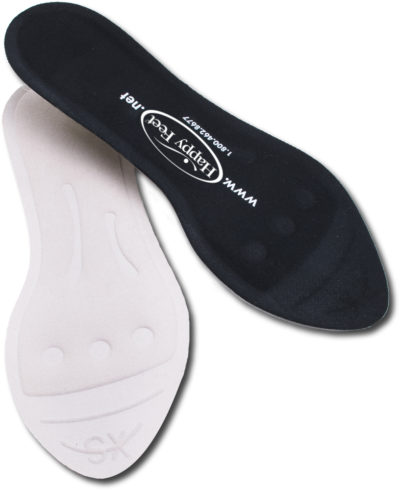
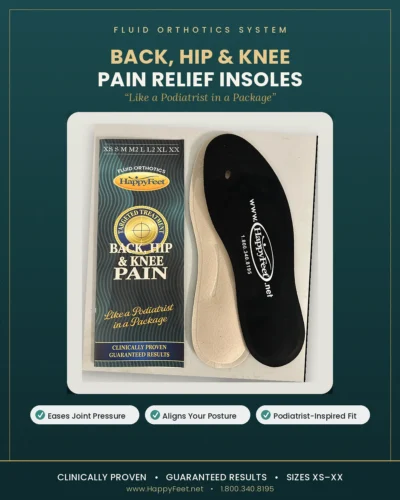
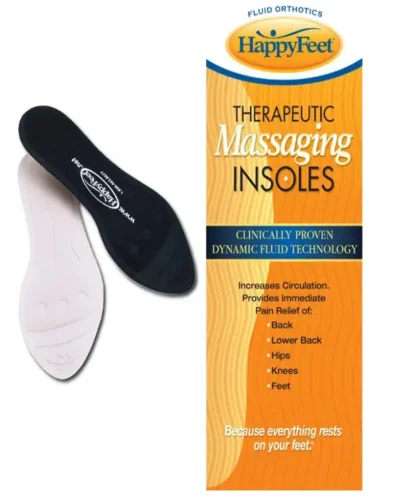
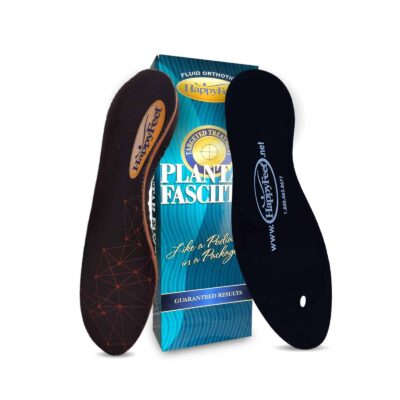
High-quality medicated insoles, particularly fluid-filled insoles and fluid orthotics, are made to lessen stress on delicate foot parts, absorb shock, and distribute pressure more evenly.
Selecting an insole that matches your specific condition is just as important as choosing supportive footwear.
❌ 7. Ignoring the Real Cause of Foot Pain
Foot discomfort is a symptom, not a disease.
Discomfort can result from a variety of problems, such as:
- Plantar fasciitis
- Flat feet
- Heel spurs
- Tight calf muscles
- Poor footwear
- Overuse injuries
It’s crucial to identify the underlying cause of the pain rather than just treating it. The most frequent causes of persistent foot pain are examined in our guide, “7 Common Causes of Foot Pain You Shouldn’t Ignore.”
❌ 8. Assuming Flat Feet Don’t Need Treatment
Many people think there is nothing that can be done about flat feet because they are just a natural part of their anatomy.
Collapsed arches can impair posture, put more strain on the heels, and cause lower back and leg pain, however not everyone with flat feet feels pain.
See our post Flat Feet vs. Normal Feet: What’s the Difference if you’re not sure if your arches are causing your issues. describes the many treatment choices and how to recognize flat feet.
❌ 9. Ignoring Morning Heel Pain
Many people find that the first few steps after getting out of bed are when their heel pain is at its greatest.
Instead of seeing this as a serious warning sign, they just endure the discomfort till it goes away.
One of the most common signs of plantar fasciitis is morning heel pain. If this sounds familiar, learn why it occurs and how to relieve it by reading our post on Why Your Heel Pain Is Worse in the Morning (And How to Fix It).
❌ 10. Waiting Too Long to Make Changes
Foot discomfort frequently appears gradually.
Recovery normally gets simpler the earlier you start stretching, have better footwear, and correctly support your feet.
Many people don’t take action until walking, working, or exercising becomes challenging.
Don’t wait for your quality of life to be affected by the pain.
🛠️ What You Should Do Instead
These easy practices can have a big impact if you have persistent foot pain:If you’re dealing with ongoing foot pain, these simple habits can make a significant difference:
✅ Put on shoes with adequate padding and support.
✅ Make use of premium medicated insoles that appropriately distribute pressure and absorb shock.
✅ Every day, stretch your feet and calves.
✅ Try to avoid standing for extended periods of time.
✅ Take care of pain as soon as possible to prevent it from becoming chronic.
Long-lasting alleviation frequently results from small everyday improvements.
❓ Frequently Asked Questions
Is it possible for foot discomfort to disappear on its own?
While some minor foot discomfort goes away with relaxation, persistent or recurrent pain frequently necessitates adjustments to exercise, footwear, or additional support.
How can I determine whether I require insoles?
Supportive insoles may assist increase comfort and lower pressure if you have heel pain, arch pain, foot tiredness, or discomfort after standing or walking.
What is the most common error made by people?
disregarding early signs. Early treatment of foot discomfort typically results in a quicker recovery and helps avoid more significant issues.
🟢 Final Thoughts
The majority of foot pain instances don’t occur overnight, and they hardly ever go away.
You can stay active for many years to come, avoid recurrent discomfort, and heal more rapidly by avoiding these typical blunders.
You can give your feet the attention they need by wearing supportive shoes, utilizing medicated insoles that are correctly fitted, stretching frequently, and taking care of issues early on.
👉 Give Your Feet the Help They Require
The appropriate liquid-filled insoles can help lower pressure, enhance comfort, and promote better mobility on a daily basis, regardless of the cause of your foot pain—plantar fasciitis, flat arches, or prolonged standing.Every day.